
Before You Ride a Street Kart in Okinawa: Where Couples Worried About the Language Barrier Tend to Stumble, and How to Prepare
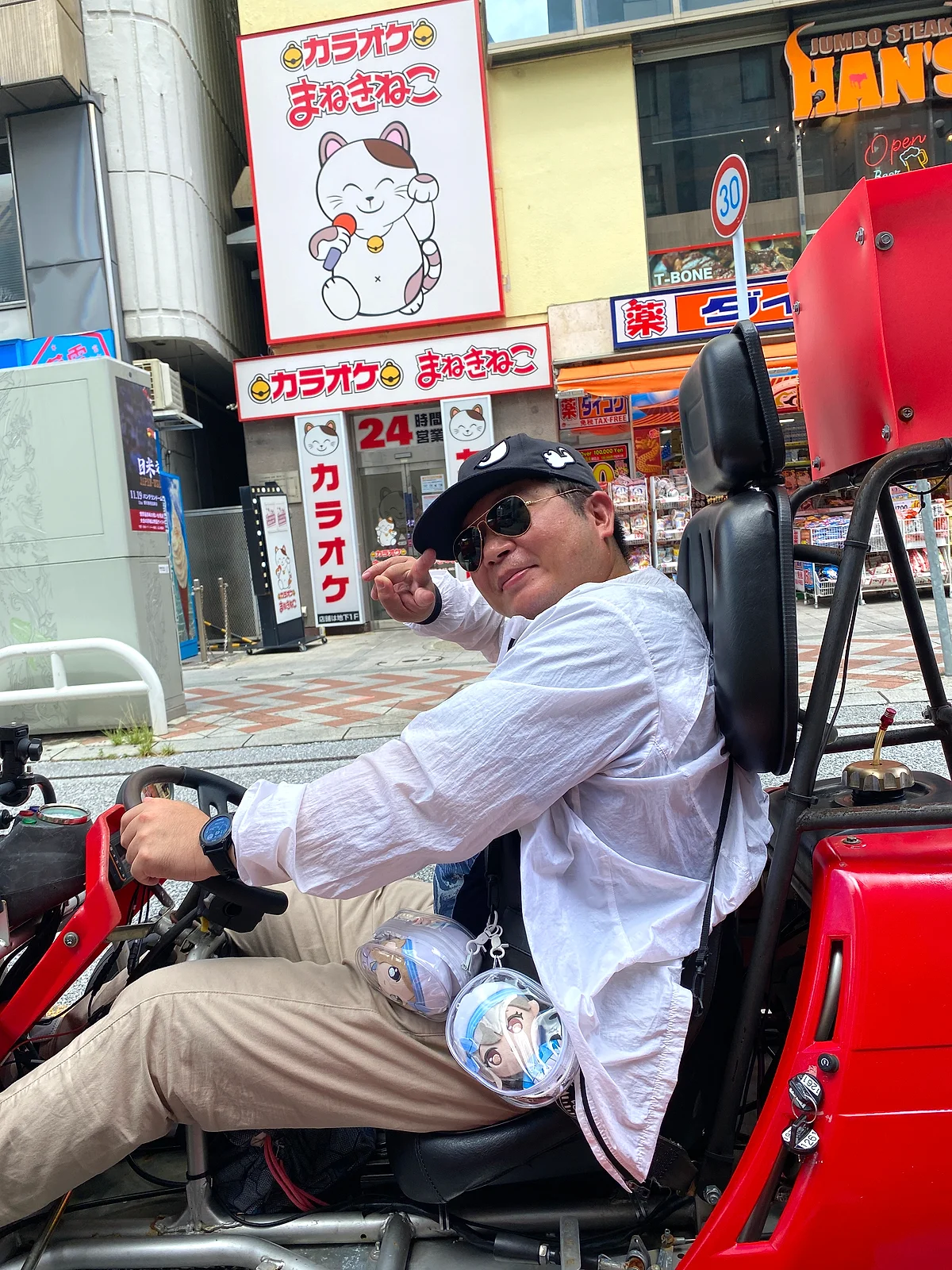
Before You Ride a Street Kart in Okinawa: Where Couples Worried About the Language Barrier Tend to Stumble, and How to Prepare
You're standing side by side outside a shop in Naha, waiting for the pre-departure briefing. The southern sun bounces white off the asphalt, and somewhere in the distance an airplane engine hums low. A staff member starts speaking in English, and the rules come quickly, one after another. You glance over and see the same look on your partner's face. "Did you catch that?" This is usually the moment when language anxiety really shows up.
But you can relax. Most of this kind of worry can be shrunk a great deal with some preparation before the day. The places where people stumble are also fairly predictable. Below, we go through the situations where couples riding a street kart in Okinawa tend to get stuck, one at a time, with specific ways to avoid each. It's also about not letting your limited travel time slip away while you're confused.
First, Understand the Language Situation on the Day
At Street Kart, including the Okinawa store, guidance on the day of the tour is basically given in English. Guidance in Japanese or other languages depends on which staff are working that day, so it isn't guaranteed. Not knowing this leads to the first mistake. A common one is assuming, "The website was in my language, so they'll explain things in my language on the day too." The official website supports 22 languages and is a great starting point for doing your homework. Still, it's safest to treat the website's language and the language used on the tour as two separate things.
If neither of you is a native English speaker, here's one small strategy: be honest about how confident you are in English when you're arranging your booking. Just adding one line like "It would help if you could speak English slowly" can make a real difference in how you feel standing outside the shop on the day. The language barrier gets higher the more you hide it, and lower once you say it out loud. In surf lessons, too, the people who say "I'm not a confident swimmer" right at the start are often the ones smiling on the waves in the end. It's the same idea.
If the two of you have different levels of English, that's also worth paying attention to. The stronger speaker takes on everything, and the other one stops listening, thinking, "I'll just leave it to them." That happens in all kinds of travel situations, but it doesn't work with karts. It's fine for the stronger speaker to handle the booking and questions. But for the rules briefing on the day, prepare on the assumption that each of you will listen for yourself. The less confident one can switch the official website to a language that's easier to read and go through the tour flow once beforehand. That alone should make it easier to pick out the outline of what you already know from the stream of English on the day.
Three Situations Where Couples Tend to Stumble
Here are three common language-related mistakes, in the order they happen. Every one of them can be dealt with ahead of time.
Thinking Your Booking Message Got Through When It Didn't
You can book via Facebook, LINE, or email. Contact details are on the official website. A common pattern here is running a long message through a translation app and sending it as is. Even if you wrote it carefully, the key details like your preferred date and number of people get blurry, and you end up going back and forth several times. If that drags on while you're planning your trip, it builds up a quiet kind of stress, like a pebble stuck in your shoe.
The fix is simple: write short English sentences, one per line. For your preferred date, it's best to write the month as a word, like "November 14." If you write it only in numbers, some countries read the month and day in the opposite order. For the number of people, write "2 people," and give both names spelled exactly as on your driver's licenses. That makes the bones of your request much easier to see. Take screenshots of the replies and share them to both of your phones for peace of mind. You'll need your booking confirmation email and booking number on the day, so keep them where you can pull them up quickly. Also, weekends tend to fill up, so if you want to ride on a weekend, reach out early.
Letting Only One of You Check the License Requirements
Karts are single-seaters, and you can't ride together. If the two of you join, both of you will be driving. That means each of you has to meet the driving requirements separately. A common mistake is for one person to look it up and decide for both, "We're probably both fine." Where and when you got your license differs from person to person. Even as a couple, those are separate matters.
To avoid this, each of you should have your own license in hand and compare it against the driver's license information on the official website. If you're reading the English page, run any unfamiliar words through a translation app at this stage. The key is to sort it out at home, at your desk, while you can read calmly. If you still can't tell after reading, add a line to your booking message describing your license situation and ask. According to the materials, you need your original paper license, and digital licenses can't be used. If you don't have the required documents on the day, you can't participate, and there's no refund. The required documents may change, so please check the official website for details. Getting on a plane to Okinawa with this still unclear is the one mistake you really can't undo.
Pretending to Understand the Pre-Departure Briefing
The tour is led by a guide, and you drive a set course determined by each store. Since you don't choose your own route, following the guide's signals and instructions is the foundation of everything. That's exactly why it's risky to get through the pre-departure briefing on a "more or less" basis. The English was fast and you didn't catch it, but you nod along with everyone else. This is where language anxiety shows up in its most dangerous form.
The fix is to agree on a few short phrases for asking again, together, ahead of time. "Sorry, one more time, please." "Slowly, please." "Is this OK?" Having just these three should greatly reduce the moments where all you can do is nod silently. Asking again isn't rude at all; if anything, it's necessary for safety. Once the briefing is over, it's also a good idea to quickly check with each other before setting off: "That rule meant this, right?" Don't count on interpreting while driving; make sure both of you understand the briefing before you start. What matters is that both of you have understood it with your own ears before the engines start.
Another thing that helps is saying basic traffic-related English words out loud together before departure. Stop, slow down, follow, left, right, wait. They're all middle-school-level English, but whether your ears catch them in fast speech depends on whether you've said them out loud once beforehand. In surfing, too, the reason your body moves when someone shouts "Paddle!" on the water is that you ran the word through your body once on the beach. You don't need to make flashcards. Tossing the words back and forth while looking out the window of the Yui Rail monorail or a taxi on the way is plenty.
If you use a translation app, keep it to talking with staff before departure. Don't reach for your phone while driving. That's a basic rule that comes before any language issue. Also, if you're coming from the US or Europe, keep in mind that Japan drives on the left. Australia also drives on the left like Japan, so it'll feel familiar to Aussies, but for people from right-hand-traffic countries, the switch is a bigger adjustment than you might expect.
Photos and Time: How to Divide Up a Limited Stay
When two of you travel to Okinawa, your time there is usually limited. So how you plan around the tour changes the feel of the whole trip. The first thing to avoid is driving to the shop in a rental car. Getting around Okinawa tends to revolve around rental cars, but the store has no parking. Use public transportation or a taxi, and plan to arrive with time to spare. Tour length varies by plan, so check the official website and avoid cramming too much before and after.
Another thing to have ready is a sentence for when you're running late. If you get held up with a transfer and try to type a long message in a panic, that alone lets time slip through your fingers. If you save a short English message like "We are running late. We will arrive in about 10 minutes." in a note or draft in the app you used to book, you only need to change the number and send it. Sending it through the same channel you booked with keeps everything in one place, which makes it easier for you to look back on too. Running out of phone battery on a trip is another classic mistake, so along with the screenshots of your booking replies, don't forget a portable battery.
Easy places to stop by before or after the tour are Kokusai Street, about a 10-minute walk from the shop, and Makishi Public Market, which is along it. In the market, lined with Okinawan ingredients, the shimmer of fish scales and the voices of the vendors blend right into the air, and just walking through together you'll keep finding things to photograph. If you have time to go a little further, Yachimun Street (Tsuboya), about a 15-minute walk, is also nice. It's a street lined with pottery shops, and it suits people who want calmer photos: the way glazes softly absorb the light, the texture of the stone paving. The market and Yachimun Street aren't on the tour course, so think of them as places to fit into your time "before the ride" or "after the ride."
One more important point about photos. Don't plan on taking pictures while driving. The basic rule is to confirm when and how photography is allowed during the pre-departure briefing and follow the guide's instructions. Here again, "Is this OK?" comes in handy. Along the Okinawa store's routes there's scenery such as Senagajima Island, the area around Naha Airport, and coastal roads, but where you go depends on the plan. If there's a view you're curious about, asking when you book will help you picture the day. If you really want to come away with good photos, the surest bet is to take a shot of the two of you side by side in front of the shop before departure.
If I can offer just one tip from a photographer's point of view: when you face the Okinawan sun head-on, you almost always end up squinting. Step into a bit of shade, or put the sun diagonally behind you. That alone puts a rim of light around your hair, and both of you will look natural in the photo.
If your itinerary has room, another option is to visit Senagajima Umikaji Terrace at a different time of day. About 15 minutes by car from the shop, it's a shopping complex with white buildings lined up facing the sea, where you can take photos against an emerald-green ocean. Scheduling it right before the tour makes timing hard to predict, so planning it separately from the tour lets both of you enjoy it in a relaxed way. As with taking photos anywhere in nature, take your trash with you and leave the scenery as it is for the next people. That way of spending time suits Okinawa and its beautiful sea.
What Street Kart Offers, Seen Through the Eyes of a Couple Worried About Language
We've spent a lot of time on mistakes, but seen from the perspective of a couple worried about language, Street Kart offers quite a few things that help you prepare.
First, it's clear in advance that guidance on the day is basically in English. Knowing what you're up against makes it easier to focus your preparation than not knowing what language you'll be spoken to in. The strategy of having three phrases ready for asking again only works because of this.
Second, a trained guide leads the way. Courses are set by each store, and instead of finding your way with a map in hand, you drive following the guide in front of you.
Third, there are plenty of ways to do your homework. The official website supports 22 languages. If one of them is easy for you to read, you can use it to check information beforehand. Being able to hear the English briefing on the day as a way of checking what you've already read makes a big difference emotionally, I think.
Fourth, there's scenery unique to Okinawa. Coastal roads, and planes taking off and landing around the airport. As you get a little farther from the city of Naha, the depth of the sky's color and the salty smell in the wind change. Even if you don't understand the words, you can enjoy what you see just as it is.
Fifth, there's the feel of the vehicle itself. Once you start moving, the wind hits your cheeks directly, and the sounds of the city reach your ears without anything in the way. Like riding a wave, it's an experience where your body takes in the fun before words do.
Sixth, there's the track record. As of November 2023, across all stores combined, there had been more than 150,000 tours, more than 1.34 million customers, and more than 20,000 reviews, with an average rating of 4.9 out of 5.0. There are 9 stores nationwide, and the Okinawa store is in Naha.
One Message Before You Go Can Shrink Your Worries a Lot
You may not be able to eliminate language anxiety, but you can shrink it. There isn't much to do. Do your homework on the official website, check each of your licenses, and send your booking message in short English sentences. On the day, head over by public transportation with time to spare, and don't hesitate to ask again about anything you didn't understand in the briefing. Do just that, and by the time the start signal sounds, your anticipation of what the wind feels like on the coastal road should be bigger than any worry about whether you'll understand.
If you're aiming for a weekend, book early. Start by checking the tour details and contact information on the official website, and try writing that first message together. Your trip has already begun the moment you send a few short lines in English. And later, under the strong Naha sun, what stays with you both most won't be the English briefing. It'll be the sound of the wind.
This article was originally written in Japanese and translated using AI. Some expressions may read unnaturally, and we appreciate your understanding. For the most accurate and up-to-date information, please refer to the official site at kart.st.
Street Kart is not affiliated with Nintendo or the Mario Kart series in any way. We do not provide costumes of Nintendo characters, and such costumes may not be worn during tours even if brought by participants.